


120 Years of Island History
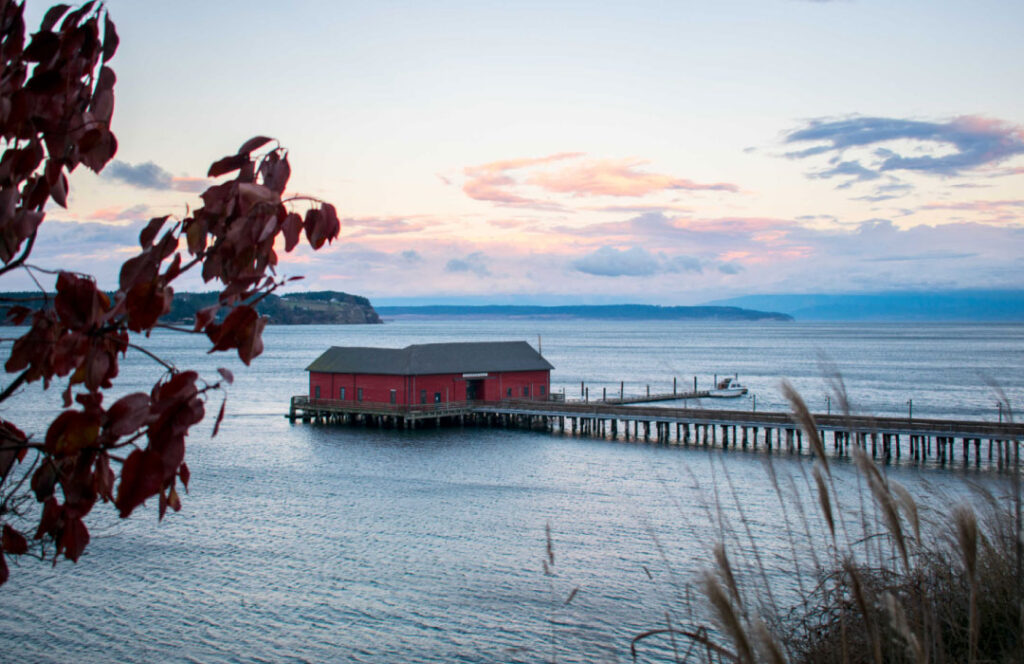
Rising above the calm waters of Penn Cove in the heart of historic Coupeville, the Coupeville Wharf is one of the most iconic and enduring landmarks on Whidbey Island. Its weathered pilings and wooden frame tell the story of over a century of seafaring commerce, local agriculture, and community resilience. From its early days as a hub for steamship travel and grain export to its modern role as a visitor destination and historic treasure, the wharf is a place where past and present meet. Paired with the nearby Island County Historical Museum, it provides a rich and immersive window into the life and legacy of Central Whidbey.
Today, the Coupeville Wharf also serves as a powerful example of regenerative tourism. This model goes beyond minimizing impact to actively restoring and enhancing the cultural and environmental fabric of a place. Preserving local history and heritage, such as that of the Wharf and the surrounding town, is essential to sustaining the region’s identity, authenticity, and economic vitality. By honoring the past, we enrich the present and safeguard Coupeville’s future for generations to come.

Beginnings in a Changing World
In the late 19th century, Coupeville’s strategic location on Penn Cove made it a natural hub for maritime trade. The 1901 completion of nearby Fort Casey marked a turning point. Military activity brought new residents, commerce, and the need for a more functional wharf. In response, the current Coupeville Wharf was built in 1905, extending far enough into the bay to accommodate larger steamships, regardless of the tides. It quickly became the main artery for transporting goods and passengers to and from Whidbey Island.
Daily steamboat service to Seattle and other Puget Sound cities made Coupeville Wharf a lifeline. Farmers brought their produce, especially grains, to the dock for shipment. Local merchant Elmer Calhoun added a grain elevator in 1909, making the facility even more crucial to regional commerce.
Transition and Preservation
The rise of automobile travel in the 1930s, particularly after the opening of the Deception Pass Bridge in 1935, marked the decline of regular steamship service. The wharf fell into quieter use, and its structures began to weather the passage of time and tide. Still, it remained a gathering point for the town and a reminder of its origins.
In 1969, the Hansen family sold the wharf to the newly formed Port of Coupeville. A complete rehabilitation and preservation effort was launched in 2018 and was completed in 2025.
Community voices strongly favored honoring the Wharf’s historical integrity over modernization. Today, the wharf is preserved as part of Ebey’s Landing National Historical Reserve, the first historical reserve in the nation, designated by Congress in 1978 to protect not just scenic beauty but living history.
That designation underscores the idea that historic preservation is not just about buildings, it’s about sustaining the stories, livelihoods, and cultural practices that make a place unique. This ethos is central to regenerative tourism and the long-term health of the community.

Island County Historical Museum: The Context Keeper
Just steps from the base of the wharf sits the Island County Historical Museum, housed in a barn-style building with sweeping views of Penn Cove. The museum is a vital companion to the Wharf’s story, offering rich exhibits that explore Indigenous Coast Salish life, early settler communities, maritime trade, and the evolution of Island County through the centuries.
Inside, visitors can find steamship artifacts, historic maps, farm tools, and personal accounts that bring the past vividly to life. The museum’s archives are a treasure trove of land deeds, letters, oral histories, and photographs, offering a deeper understanding of the Wharf’s role in the region’s economic and cultural development.
An Anchor to the Community
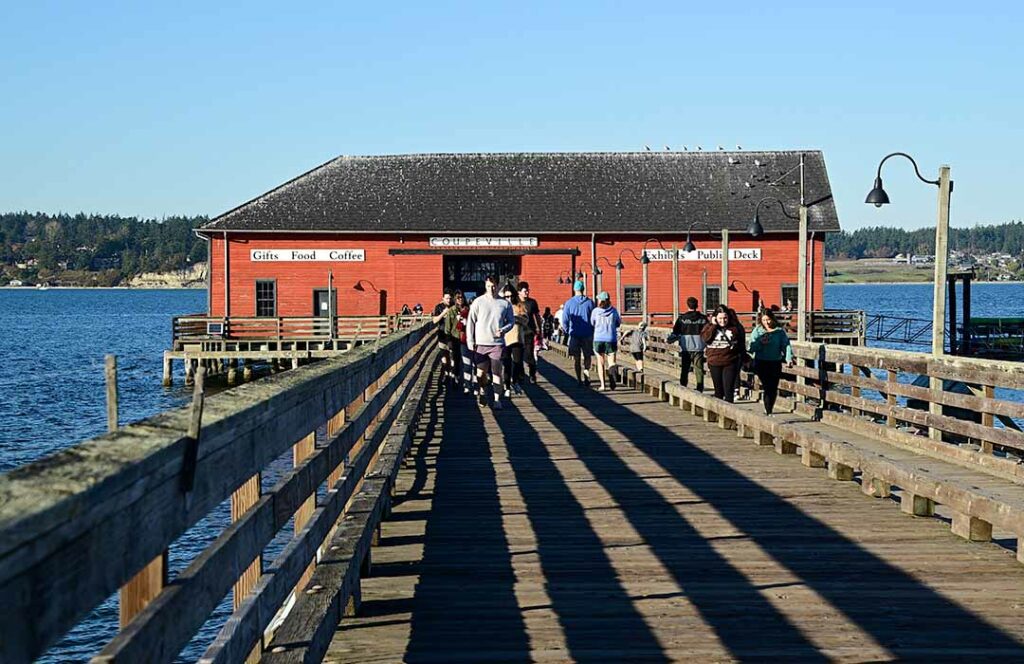
Today, the Coupeville Wharf is a community anchor and visitor favorite. It houses a café, a marine education center, two gift shops, and kayak rentals. Interpretive signs guide visitors through the area’s marine and cultural history. Wildlife sightings—bald eagles, harbor seals, and even the occasional whale—remind us that Coupeville’s natural legacy is just as rich as its human one.
The Wharf is also home to the Schooner Suva, a 65-foot wooden vessel celebrating its centennial anniversary. The Whidbey Maritime Heritage Foundation maintains it, offering tours and sails. Suva provides visitors with hands-on access to the region’s maritime heritage.
Yet like so many coastal structures, the Wharf faces environmental threats. Rising sea levels, stronger storms, and aging pilings have placed it on the Washington Trust for Historic Preservation’s 2024 Most Endangered Places list. The Port of Coupeville is actively pursuing funding to raise the Wharf so that it remains a vibrant part of the community’s future, not just its past.
Regeneration Through Stewardship
Regenerative tourism emphasizes giving back more than we take. In Coupeville, that means preserving the Wharf, supporting the museum, shopping locally, and learning the layered stories of this land, from the Indigenous Lower Skagit people to homesteaders, shipbuilders, and farmers.
When visitors engage with Coupeville’s heritage, not just by looking, but by listening, contributing, and caring, they become part of its regeneration. Every visit to the Wharf, every donation to the museum, and every shared story sustains the town’s unique sense of place.

Interesting Facts
- Longest dock on Whidbey Island: At 500 feet, the Wharf reaches deep water, unlike any other structure on the island.
- Historic Hub: Steamships connected Coupeville to Seattle, Bellingham, and Port Townsend well into the 1930s.
- Grain Elevator Legacy: Once known as “the Old Grain Wharf” due to its essential agricultural role.
- Museum Nearby: The Island County Historical Museum is just steps away from the Wharf and a must-visit for any history lover.
- Protected Landmark: Part of both the Central Whidbey Historic District and Ebey’s Landing National Historical Reserve
Learn More and Get Involved
- Coupeville Wharf 120th Anniversary Party
Saturday, July 19th, Noon to 6:00 PM - Island County Historical Museum: islandhistory.org
Located at 908 NW Alexander St, Coupeville, WA
Open year-round with exhibits, archives, and special programs. - Port of Coupeville: portoc.org
Learn more about preservation efforts, Wharf history, and how you can help. - Ebey’s Landing National Historical Reserve: nps.gov/ebla
Explore the trails, farms, and historic buildings that comprise this nationally significant cultural landscape.
Coupeville’s past is not just something to look at—it’s something to walk on, breathe in, and carry forward. By protecting places like the Coupeville Wharf and supporting institutions like the Island County Historical Museum, we ensure that history is not forgotten but regenerated into something enduring and alive.